
Rinjani trekking in Lombok, Indonesia is one of the most rewarding multi-day hikes in Southeast Asia. Mount Rinjani rises 3,726 metres above the island, and a pre-dawn summit push rewards you with sunrise views across Lombok, Bali, neighbouring Sumbawa and the crater lake far below.
This guide covers what travelers and hikers need to plan a trek: the best months to go, how the routes compare, sample itineraries, costs, fitness and safety rules, a packing list and how to choose a licensed operator. It reflects the park rules in force for the 2026 season.
Rinjani Trekking in Lombok Indonesia Complete Guide
Whether you want a two-day crater rim hike or a full multi-day traverse, there is a Rinjani route for you. Just remember that the mountain is a protected conservation area, so good preparation and respect for the park rules matter as much as fitness.
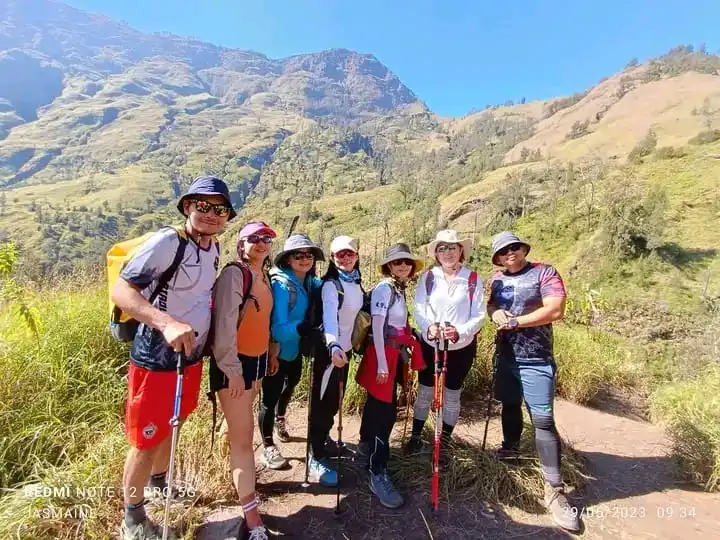
About Mount Rinjani
Mount Rinjani is an active volcano and the second-highest volcano in Indonesia at 3,726 metres. It sits inside Mount Rinjani National Park, which protects about 41,000 hectares of forest, savannah and volcanic highlands, with a further 66,000 hectares of protected forest outside the park boundary.
The mountain’s defining feature is its caldera. Inside it lies Segara Anak, the crater lake, with natural hot springs along its shore where trekkers soak tired legs after the climb. A smaller volcanic cone, Gunung Baru, rises from the caldera. Most itineraries camp on the crater rim, which sits at roughly 2,640 metres whether you arrive from Senaru or Sembalun.
Rinjani is also important to the Sasak people of Lombok, and the villages at its base, Senaru and Sembalun, are the main gateways to the trail. The mountain is popular: park figures reported in February 2026 show that trekking drew 80,214 visitors in 2025, including 43,236 international trekkers.
Best Time for Rinjani Trekking
The trekking season runs from April to December. The park closes every year from 1 January to 31 March for the rainy season, and in 2026 it reopened on 28 March, according to the park agency. Exact dates can shift, so confirm the current opening date before you book flights.
Within the open season, each period feels different:
- April to June: Green landscapes and fewer trekkers, with some rain still possible early on.
- July to September: Peak season, with the clearest skies and the most reliable summit views. Book early.
- October to December: Quieter trails, but the weather turns wetter toward the end of the year.
Pack warm layers in every month. Summit temperatures can approach freezing, and you climb in the dark with wind chill. Never trek during the closure: three climbers who went up in March 2025 were caught on CCTV, fined and blacklisted from the park.
Rinjani Trekking Routes: Sembalun, Senaru, Torean and Timbanuh
Rinjani has several official trailheads. Your choice shapes the scenery, the difficulty and how many other trekkers you meet.
| Route | Trailhead | Best for | What to expect |
| Sembalun | East side, Sembalun village | Summit seekers | Open savannah and a long climb to the crater rim (6-7 hours), then the summit push |
| Senaru | North side, Senaru village | Forest and lake lovers | Tropical rainforest, a steep climb to the crater rim and wide views over the caldera |
| Torean | Torean village | A scenic descent | A quieter river-valley route with cliffs and waterfalls (5-7 hours down) |
| Timbanuh | South-east side | Fewer crowds | A less-used trail; confirm with your operator that it is running this season |
The most popular way to do Rinjani trekking in Lombok, Indonesia is a traverse: climb from Senaru through the rainforest, visit the lake and hot springs, then finish with the summit from Sembalun. Sembalun is the more direct route to the top, so it suits fit hikers on a tight schedule. Senaru offers more shade and forest scenery, which many trekkers prefer for the first day.
Rinjani Trekking Itineraries: 2, 3 and 4 Days
Choose by how much time you have and whether the summit is a must.
2 days, 1 night: Sembalun summit trek
- Day 1: Check in at the park office, then hike from Sembalun village to the crater rim (6-7 hours) and camp.
- Day 2: Start around 2 a.m. for the summit (about 3 hours), watch sunrise at 3,726 metres, then descend to Sembalun.
This is the fastest way to the top and suits fit, experienced hikers. If you want caldera views without the summit, a two-day Senaru crater rim trek is the easier option.
3 days, 2 nights: Senaru to Sembalun traverse
- Day 1: Hike from Senaru village through rainforest to the Senaru crater rim.
- Day 2: Descend to Segara Anak lake, soak in the hot springs, then climb to the Sembalun crater rim.
- Day 3: Summit at sunrise (starting around 2 to 3 a.m.), return to the rim for breakfast, then walk down to Sembalun village.
This is the classic itinerary and the best balance of scenery and effort.
4 days, 3 nights: relaxed summit and lake
A fourth day adds a slower pace, extra time at the lake or a finish through the Torean valley and its waterfalls. It is the best choice for first-timers who want more recovery time at altitude.
Rinjani Trekking Cost, Permits and What Is Included
Multi-day Rinjani treks with reputable operators generally cost about US$225 to US$395 per person in 2026 (approximate, based on published operator ranges), depending on duration, route and group size. Larger groups usually pay less per person.
A fair package should include:
- Transport between your hotel and the trailhead
- National park entrance fee and trek permit
- A licensed guide, porters and a cook
- Meals, drinking water and snacks on the mountain
- Tents, sleeping mats and cooking equipment
Check whether the mandatory trekking insurance is included or must be bought separately. Tips for guides and porters, flights, hotel nights and personal gear rental are usually extra.
The park’s 2025 operating procedures (an unofficial English translation) require you to book through a licensed trekking organizer. From 1 January 2026, premium insurance is compulsory and each guide may lead no more than four trekkers. An unusually cheap offer that ignores these rules is a red flag, not a bargain.
Fitness, Altitude and Safety on Rinjani
Rinjani trekking in Lombok, Indonesia is demanding but achievable for fit beginners. Summit day alone can last around 12 hours, with a steep, loose volcanic ascent in the dark. Train for four to six weeks with hill walks, stair climbing and a loaded daypack.
Park rules every trekker should know in 2026:
- Solo climbing is prohibited; groups must have at least two people.
- Climbers are expected to have prior hiking experience.
- Anyone under 17 needs an adult companion and written parental consent.
- You must carry cold-weather gear, reduce single-use plastics and bring all your waste out with you.
- The 2025 park procedures also list a medical certificate issued within one day before the trek, so ask your operator what they need from you.
At 3,726 metres, headaches and nausea are possible. Walk slowly, drink plenty of water, eat regularly and tell your guide early if you feel unwell. Confirm that your travel insurance covers trekking to nearly 4,000 metres, and ask your operator about any volcanic activity alerts before you set off.
Rinjani Trekking Packing List
- Broken-in trekking shoes with good grip, plus gaiters for loose volcanic scree
- Layers: base layer, fleece, insulated jacket and a waterproof shell
- Warm hat, gloves and a neck buff for the summit
- Headlamp with spare batteries for the 2 a.m. start
- Trekking poles for the long descent
- Sleeping bag rated to around 0 degrees C (many operators rent them)
- Reusable water bottle or bladder, 2 to 3 litres
- Sunscreen, sunglasses and a cap for the open savannah
- Personal medication, blister care and a small first-aid kit
- Power bank, cash for tips and a dry bag for electronics
How to Choose a Rinjani Trekking Operator
Your operator decides how safe, comfortable and responsible your trek will be. Before you book, check that they:
- Hold a trekking organizer license recognised by the park
- Keep to the rule of no more than four trekkers per guide
- Put insurance and park fees in the quoted price, in writing
- Treat porters fairly, with sensible loads, proper clothing and shelter
- Carry all waste off the mountain and limit single-use plastics
- Have a clear emergency and evacuation plan, with first-aid trained guides
- Cap group sizes so camps stay quiet and trails feel uncrowded
Read recent reviews, ask for a day-by-day itinerary and avoid anyone selling same-day passes at the trailhead.
Rinjani Trekking FAQ
How hard is Rinjani trekking?
It is a tough multi-day trek with steep climbs, loose volcanic ground and a very early summit start. Most reasonably fit hikers can manage it with training and a good guide.
How many days do I need to trek Rinjani?
Two days is the minimum for the summit via Sembalun. Three days and two nights is the most popular option, and four days is the most relaxed.
Can I climb Rinjani without a guide?
No. Solo climbing is prohibited, and the park’s procedures require you to trek with a licensed trekking organizer, so plan on a guide.
Do I need travel insurance?
Yes. Trekking insurance is mandatory, and premium cover is compulsory from 1 January 2026. Check that your own policy also covers trekking at altitude.
Is the summit included in every trek?
No. Crater rim treks, such as the two-day Senaru route, skip the 3,726 metre summit. Confirm that the summit is in your itinerary before you book.
Is it safe to trek an active volcano?
Rinjani is an active volcano, but treks run throughout the open season under park supervision. Follow your guide, respect closures and ask about current alerts.
Plan Your Rinjani Trek
Rinjani trekking in Lombok, Indonesia combines a demanding summit, a crater lake and natural hot springs in one trip. Pick your season (April to December), choose the route that matches your fitness and book a licensed operator early, especially for July to September.
Ready to go? Send us your dates and group size at [your contact link], and we will recommend the best Rinjani trekking route for you.